EndoAxis Clinical Team
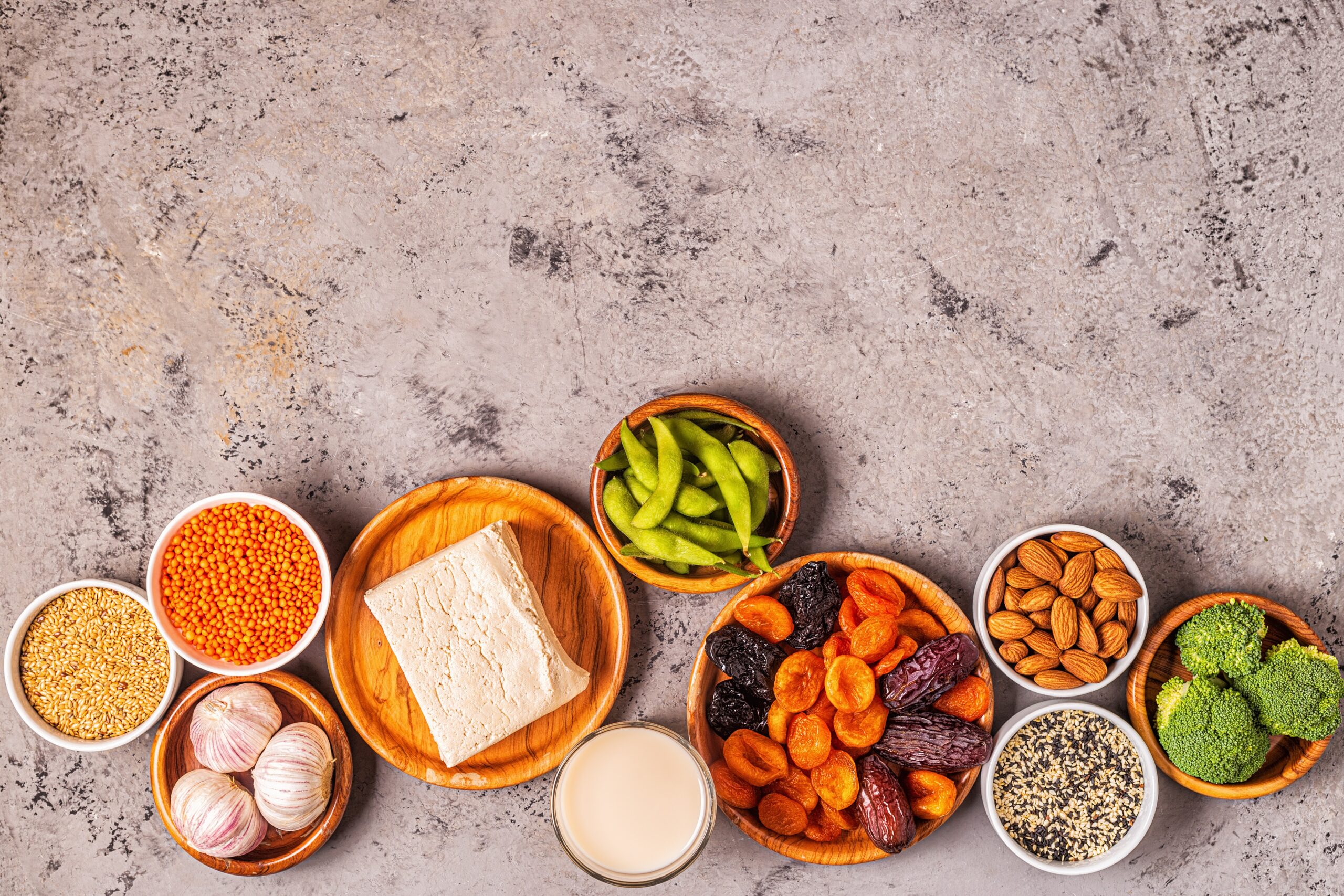
The term “phytoestrogen” is often misunderstood to imply uniform estrogen receptor (ER) binding and estrogenic activity. In practice, most phytoestrogenic herbs exert a broad range of effects, often without direct estrogen receptor stimulation.
Mechanisms, Receptor Specificity, and Clinical Applications
Phytoestrogenic botanicals can modulate hormone balance through:
- Preferential ERβ activation, associated with protective, anti-proliferative effects.
- Enzyme modulation, influencing estrogen metabolism and detoxification.
- Neuroendocrine and adaptogenic effects that indirectly support hormonal homeostasis.
Such complexity makes phytoestrogens especially relevant in supporting peri- and post-menopausal women, including those already using bHRT.
Estrogen Receptor Selectivity: Focus on ERβ
Phytoestrogens typically demonstrate selective estrogen receptor modulator (SERM)-like behavior:
- ERα is associated with cellular proliferation (e.g., breast, endometrium).
- ERβ exerts anti-proliferative and protective effects in the brain, bone, and vasculature.
By preferentially binding to ERβ, certain phytoestrogens provide targeted support without overstimulating ERα-driven pathways, reducing risks associated with systemic estrogen dominance.
Clinical Synergy with bHRT
The adjunctive use of phytoestrogens with bioidentical hormones may:
- Improve tissue-specific sensitivity to exogenous estrogen.
- Allow for symptom control at lower hormone dosages.
- Mitigate vasomotor, cognitive, metabolic, and inflammatory symptoms often incompletely addressed by estrogen alone.
- Modulate estrogen metabolism toward favorable pathways (e.g., 2-hydroxylation).
Key Phytoestrogenic Herbs and Their Mechanisms
| Black Cohosh (Cimicifuga racemosa) | Does not bind estrogen receptors; works via serotonergic and dopaminergic pathways. Effective for vasomotor symptoms by modulating the thermoregulatory nucleus and serotonergic tone. Shown to be safe for breast cancer survivors on Tamoxifen due to its non-estrogenic mechanism. |
bHRT synergy: Ideal for women with persistent hot flashes despite estradiol therapy or those at risk for estrogen-sensitive cancers.
| Licorice (Glycyrrhiza glabra) | Contains glabridin and glabrene, weak ERβ agonists in high concentrations. Enhances CYP1A1 expression, promoting 2-OH estrogen detoxification. Demonstrates anti-inflammatory, metabolic, hepatoprotective, and chemoprotective properties. Reduces androgen biosynthesis, making it valuable in PCOS and estrogen-dominant profiles. |
bHRT synergy: Supports safe estrogen metabolism and allows for lower therapeutic estrogen doses through improved receptor and metabolic efficiency.
| Evening Primrose Oil (Oenothera biennis) | Not estrogenic, but modulates prostaglandins through its gamma-linolenic acid (GLA) content. Helpful for hot flashes, mood changes, and skin dryness. Supports skin and hair health, indirectly improved with estradiol. |
bHRT synergy: May address non-hormonal symptoms like skin aging or inflammatory pain not fully resolved with estrogen alone.
| Maca (Lepidium meyenii) | Non-estrogenic; does not contain phytohormones. Works via glucosinolates to modulate HPA axis and neurotransmitter signaling. Demonstrated benefit for mood, libido, and energy, with no changes in serum estradiol or FSH. Different phenotypes (red, yellow, black) have varying bioactive profiles. |
bHRT synergy: Ideal adrenal adaptogen for women with fatigue, mood disorders, or inconsistent hormone responses.
| Schisandra (Schisandra chinensis) | Not estrogenic, but modulates prostaglandins through its gamma-linolenic acid (GLA) content. Helpful for hot flashes, mood changes, and skin dryness. Supports skin and hair health, indirectly improved with estradiol. |
bHRT synergy: Enhances estrogen receptor responsiveness, detoxification, and longevity pathways without directly increasing hormone levels.
| Vitex agnus-castus (Chaste Tree) | Not estrogenic, but modulates prostaglandins through its gamma-linolenic acid (GLA) content. Helpful for hot flashes, mood changes, and skin dryness. Supports skin and hair health, indirectly improved with estradiol. |
Clinical synergy: Useful for postmenopausal brain fog, mood changes, and HPA rebalancing; complements bHRT by improving regulatory tone upstream.
| Angelica sinensis (Dong Quai) | Not estrogenic, but modulates prostaglandins through its gamma-linolenic acid (GLA) content. Helpful for hot flashes, mood changes, and skin dryness. Supports skin and hair health, indirectly improved with estradiol. |
Clinical synergy: Appropriate in low-estrogen states to support bHRT effects without overstimulation; especially beneficial in pelvic pain, vaginal dryness, or irregular tissue response.
Summary: A Systems Approach to Hormone Support
While many of these herbs are labeled “phytoestrogenic,” their real clinical utility lies in their:
- Tissue-specific modulation
- Preference for ERβ
- Non-receptor-mediated benefits
- Complementarity with bHRT
Importantly, studies indicate that when these herbs are used appropriately—considering dose, species, and formulation—they do not interfere negatively with bHRT and may, in fact, enable more effective and lower-dose hormone therapy.