EndoAxis Clinical Team
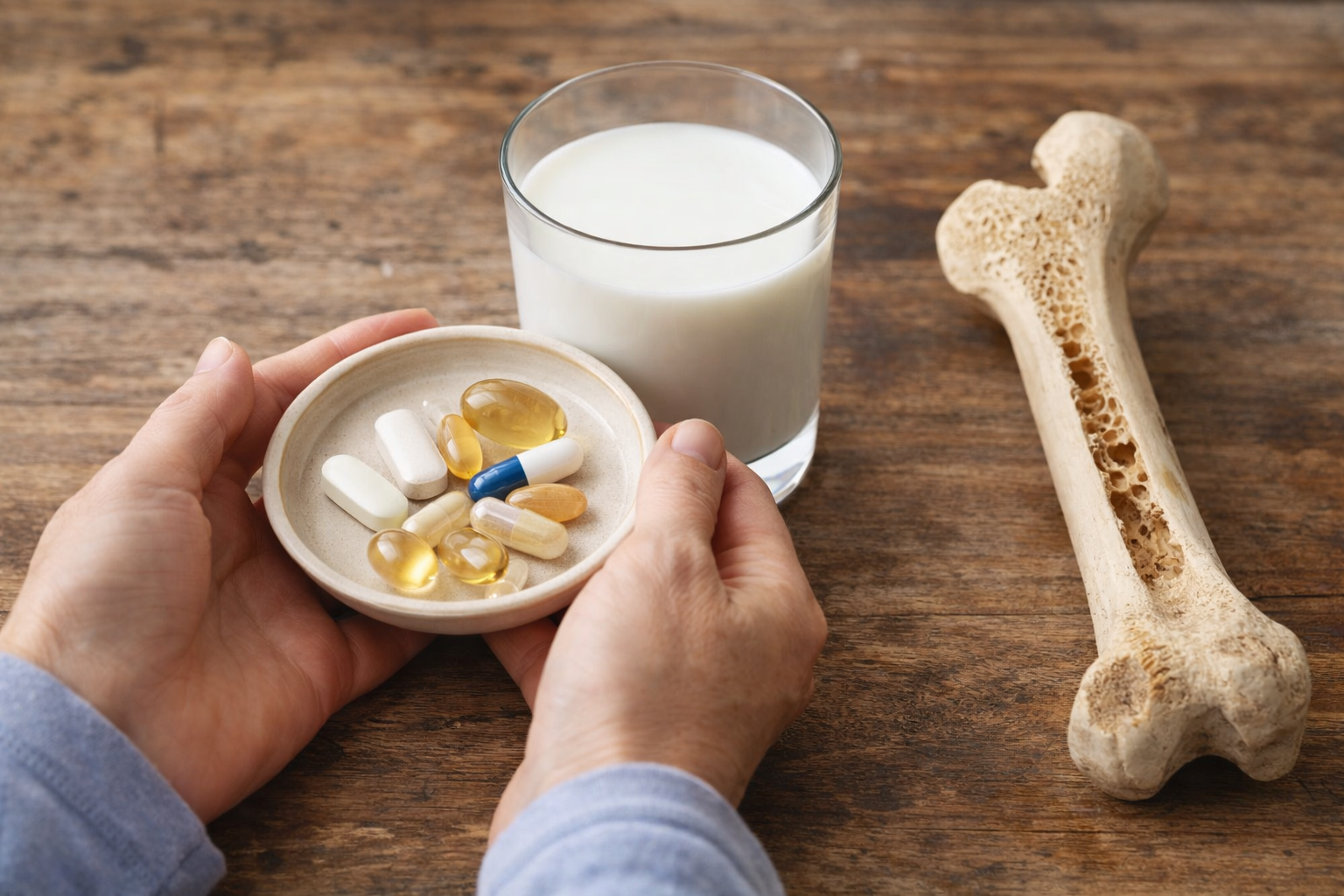
Osteoporosis is often framed as an inevitable consequence of aging: a slow decline in bone mineral density managed with calcium, vitamin D, and pharmacologic suppression of bone resorption. Yet this model fails to explain a clinical reality encountered daily in practice: fractures frequently occur in patients without osteoporosis-range DEXA scores, while others with low bone density remain fracture-free.
This paradox highlights a central truth – osteoporosis is not merely a disease of density, but a disorder of disrupted bone signaling, remodeling imbalance, and impaired skeletal resilience.
Bone is not inert scaffolding. It is a hormonally responsive, metabolically active, and neuro-innervated tissue that continuously integrates endocrine, mechanical, inflammatory, and autonomic input. When those signals become dysregulated, bone architecture deteriorates long before density alone reveals risk.
Bone Remodeling: A Delicate Biological Conversation
Healthy bone depends on tightly coupled remodeling between osteoclast-mediated resorption and osteoblast-driven formation. We remember that osteoblasts create bone and support mineralization, and osteoclasts resorb old bone and break down damaged bone.
This process is regulated by:
- Sex hormones
- Cortisol and adrenal signaling
- Insulin and IGF-1
- Thyroid hormone
- Sympathetic nervous system activity
- Inflammatory cytokines
- Mechanical loading
Disruption at any point can uncouple remodeling, allowing resorption to outpace formation, weakening trabecular structure and cortical integrity.
Importantly, bone strength reflects not only mineral content, but microarchitecture, collagen quality, and turnover dynamics – variables not captured by DEXA alone.
Sex-Specific Bone Physiology: More Than Estrogen Loss
Female bone health
In women, estrogen plays a dominant anti-resorptive role. Estradiol suppresses osteoclast activity through inhibition of RANKL signaling and upregulation of osteoprotegerin, while simultaneously dampening inflammatory cytokines such as IL-1, IL-6, and TNF-α.
*RANKL = Receptor activator of nuclear factor kappa-B ligand, also known as tumor necrosis factor ligand superfamily member 11 (TNFSF11).
The menopausal transition represents a profound biological shift. Within the first five to seven years following menopause, women may lose up to 20% of trabecular bone mass, largely driven by accelerated osteoclast activation rather than reduced calcium intake.
This helps explain why bone loss during early menopause is often rapid and clinically silent, occurring before fractures, before abnormal DEXA thresholds, and often before intervention is considered. In the world of medicine, most insurance companies do not cover screening for bone density until a woman is 60 yo, though her highest bone density will occur in her 30’s. So women are likely losing bone density for years prior to consideration of screening or measurement.
Male bone health
In men, osteoporosis remains underrecognized and undertreated. While testosterone is commonly emphasized, estradiol – derived from aromatization – appears to be the principal hormone protecting male bone.
Low estradiol levels correlate more strongly with fracture risk in men than testosterone levels alone. Conditions that impair aromatization, suppress gonadal function, or alter hypothalamic signaling, including obesity, chronic opioid use, androgen deprivation therapy, and aging, significantly increase skeletal vulnerability.
As a result, many men with “normal testosterone” may still experience progressive bone loss in the setting of insufficient estradiol signaling.
Factors That Contribute To Bone Loss
Alcohol exposure
Alcohol disrupts bone physiology through multiple mechanisms:
- Inhibition of osteoblast differentiation
- Increased oxidative stress within bone tissue
- Altered vitamin D metabolism
- Increased cortisol secretion
- Disruption of sex hormone metabolism
Even moderate chronic intake has been associated with increased fracture risk independent of bone mineral density, underscoring alcohol’s role in impairing bone quality rather than density alone.
Medications and iatrogenic contributors
A growing number of commonly prescribed medications influence bone remodeling:
- Glucocorticoids: direct osteoblast suppression and increased osteoclast survival
- Proton pump inhibitors: impaired mineral absorption and altered osteoclast signaling
- SSRIs: serotonin-mediated inhibition of osteoblast activity
- Aromatase inhibitors and GnRH agonists: profound sex hormone depletion
- Anticonvulsants: altered vitamin D metabolism
- Chronic opioids: hypogonadism and reduced mechanical loading (physical stress)
GLP-1 receptor agonists have emerged as a newer area of concern. While not inherently osteotoxic, rapid weight loss reduces mechanical loading, often results in lean mass loss, and may reduce anabolic insulin and IGF-1 signaling to bone. In peri- and postmenopausal women, this combination may accelerate bone loss if not proactively monitored.
Endocrine and metabolic influences
Bone is an insulin-sensitive tissue. Insulin resistance, low energy availability, and chronic inflammation impair osteoblast activity and reduce remodeling efficiency.
Additional contributors include:
- Subclinical hyperthyroidism
- Elevated or dysregulated cortisol
- Protein insufficiency
- Magnesium deficiency
- Vitamin K2 insufficiency
- Zinc deficiency
- Chronic low alkaline phosphatase, suggesting impaired bone formation capacity
These metabolic stressors often coexist, compounding skeletal vulnerability over time.
The Nervous System–Bone Connection: An Underappreciated Driver
Bone is richly innervated by the sympathetic nervous system. Norepinephrine acts on β2-adrenergic receptors expressed on osteoblasts, suppressing bone formation and favoring resorption.
Chronic sympathetic activation, whether from psychological stress, sleep disruption, metabolic disease, or circadian misalignment, shifts bone remodeling toward loss. This neuro-skeletal axis reframes osteoporosis as partially a disorder of autonomic signaling rather than purely mineral deficiency.
Treatment Considerations: Beyond Density Suppression
Beta blockers: emerging clinical relevance
An expanding body of observational and mechanistic research suggests that low-dose beta-adrenergic blockade, particularly nonselective agents, may reduce fracture risk.
By inhibiting β2-adrenergic signaling on osteoblasts, beta blockers reduce sympathetic suppression of bone formation and may restore more favorable remodeling dynamics.
While not currently standard osteoporosis therapy, this research highlights an important paradigm shift: bone loss may be driven not only by hormonal deficiency, but by excessive sympathetic tone.
This insight positions osteoporosis within a broader neuroendocrine framework, integrating stress physiology, circadian regulation, and autonomic balance.
Estrogen replacement therapy
Prospective cohort evidence
In nearly 10,000 older women followed longitudinally, current estrogen users had significant reductions in fracture risk:
- Wrist fractures RR ~0.39All
- non-spinal fractures RR ~0.66
- Hip fracture risk tended lower (RR ~0.60)
Protective effects were strongest in women who initiated estrogen soon after menopause.
Mechanistic pathways
Estrogen:
- Suppresses bone resorption via RANKL inhibition and increased osteoprotegerin expression
- Promotes osteoclast apoptosis
- Modulates osteoblast and osteocyte survival
These molecular mechanisms are supported by comprehensive reviews of estrogen receptor signaling in bone cells. Modern research suggests that bone protective levels in serum should be above 40 to achieve protection against bone loss with estrogen bHRT.
Antiresorptive therapies
Bisphosphonates and denosumab effectively suppress osteoclast activity and reduce fracture risk. However, prolonged suppression of bone turnover may impair microdamage repair and does not restore lost architecture. These therapies stabilize bone but do not fundamentally rebuild skeletal structure.
Anabolic therapies
Parathyroid hormone analogs and sclerostin inhibitors stimulate bone formation and improve microarchitecture. Evidence consistently demonstrates that sequencing matters: anabolic therapy followed by antiresorptive maintenance produces superior long-term outcomes.
Estrogen Metabolites, the Estrobolome, and Bone Health
Beyond circulating estradiol levels, emerging evidence suggests that estrogen metabolites and gut-mediated estrogen recycling may meaningfully influence skeletal health in postmenopausal women. The 16-hydroxylated estrogen pathway, particularly 16-OH estrone (16-OH E1), exhibits relatively strong estrogen receptor-α (ERα) binding affinity: the dominant receptor expressed in bone tissue. Unlike weaker or more transient metabolites, 16-OH estrogens demonstrate prolonged receptor interaction, which may support osteoblastic activity and help counteract postmenopausal bone resorption. In this context, the estrobolome – the collection of gut microbes involved in estrogen deconjugation and recirculation – may play a protective role by maintaining low-level estrogenic signaling through enterohepatic recycling, even after ovarian estrogen production declines. This residual estrogen activity may partially explain interindividual differences in bone loss trajectories following menopause, despite similar circulating estradiol levels.
Reframing Osteoporosis
Osteoporosis is not simply the passive loss of calcium with age. It is an active, multifactorial disorder arising from disrupted communication between hormones, metabolism, mechanical input, inflammation, and the nervous system.
When we focus solely on calcium, we risk missing the biology.
When treatment expands to address signaling, hormonal, mechanical, metabolic, and autonomic systems, skeletal health becomes both more understandable and more modifiable.
DUTCH testing can be a supportive tool when evaluating overall hormone levels and hormone influence on bone health. We are able to evaluate stress/nervous system function (depletion/overstimulation), as well as the sex hormones like estradiol and 16-OH activity that can greatly impact bone health. EndoAxis technology also allows for review and understanding of these hormone effects on bone health.
Join our community for deeper insights into hormones and their impact on health.
In Health,
The EndoAxis Team