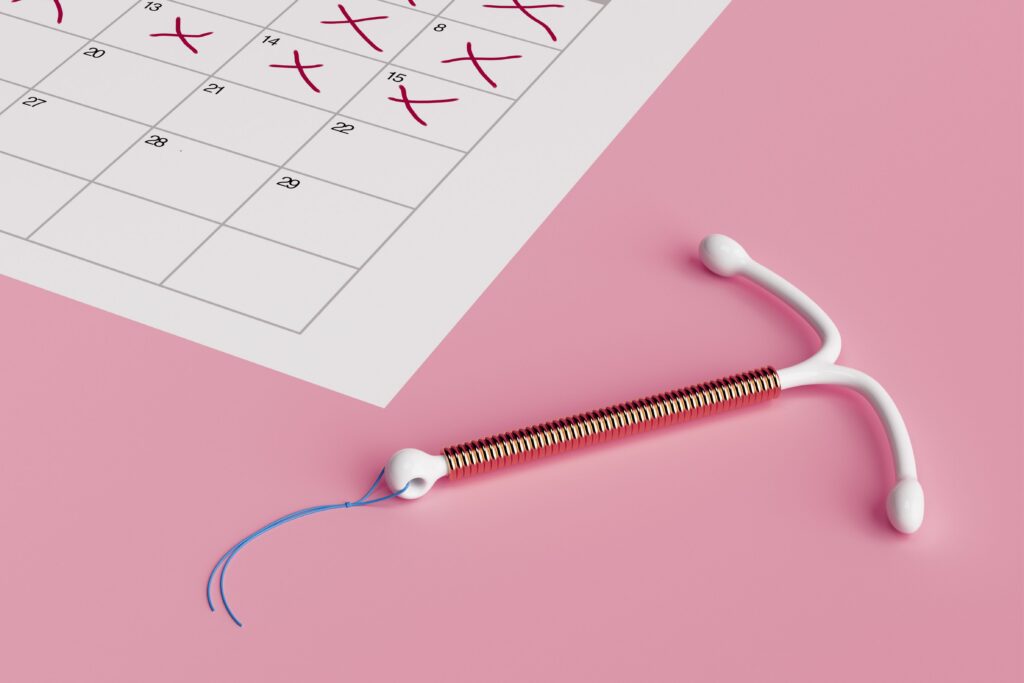
Did you know that women using Progestin IUDs may face a greater risk of experiencing high androgen symptoms, including acne, hair loss, and excess facial hair growth?
Progestin IUDs
Here are some key insights regarding the risks associated with different types of Progestin IUDs:
Acne Risk (Highest to Lowest): Kyleena > Mirena > Skyla
Alopecia and Hirsutism Risk (Highest to Lowest): Mirena > Kyleena > Skyla
Minimal Risk: Liletta IUD
These effects are linked to how Progestin IUDs modulate androgen receptors after insertion.
Progestin IUD & Mood Swings
Additionally, Progestin-containing IUDs have been associated with a greater risk of mood changes and depression, particularly among younger women. While the mental and emotional stress of an unwanted pregnancy often outweighs these risks, it is important to provide counseling and tailored support to patients using hormonal birth control to help address both physical and emotional well-being.
Progestin IUDs can also impact mineral absorption, leading to decreased levels of folate, vitamin B12, calcium, and magnesium.
Dr. Liz Bartman
Director of Clinical Sciences and Education
Dr. Liz is a naturopathic doctor with over a decade’s worth of experience in functional medicine. She currently serves as the Director of Clinical Sciences and Education for an exciting new company called EndoAxis. Having worked in Urgent Care prior to opening her private practice, Dr. Liz is well-versed in conventional standards of care and enjoys bridging the gaps of treatments and research in both the conventional and functional fields to provide tailored, evidence-based therapies to her patients. She graduated from the National University of Naturopathic Medicine, followed by the completion of a 2-year residency in Portland, OR.
She maintains a practice in Salem, OR with a focus on hormone optimization and graceful aging through an epigenetic and nutrigenomic lens. She is finalizing her advanced certification in genetics and genomic medicine through Stanford and has sought additional training to broaden her professional pursuits in areas including advanced functional nutrition, nutrigenomics, environmental health, and botanical research.
Having previously worked as an educational consultant at Precision Analytical, she has educated and consulted with physicians from around the world on complex hormone cases and has spoken professionally about hormone health, environmental toxin impacts on health, and nutrigenomic medicine.
The degree of inflammation present before menstruation may significantly influence
the severity of PMS symptoms. Explore the research connecting inflammatory pathways to premenstrual syndrome and what that may mean for a more comprehensive approach to cycle-related discomfort. For educational purposes only.
Unlike oral contraceptives, the hormonal IUD delivers levonorgestrel locally — and its
effects on systemic hormone production vary widely among individuals. Explore how the hormonal IUD differs from other contraceptive methods and what that may mean for hormone testing interpretation. For educational purposes only.
The oral contraceptive pill has transformed reproductive freedom — but its synthetic
hormones interact with the body in complex ways that extend beyond contraception. A balanced look at how ethinyl estradiol works, what trade-offs may accompany long-term use, and what that means for hormonal health. For educational purposes only.
Weight gain in menopause is rarely just about calories — declining estrogen and progesterone reshape metabolism, fat distribution, and muscle mass in ways that compound over time. Explore a functional, evidence-based approach to menopausal weight change, from hormone balancing and sarcopenia to the screening strategies that may help before the transition begins. For educational purposes only.
Hot flashes are not simply caused by low estrogen — they arise from the variability in
estrogen levels that disrupts serotonin and norepinephrine signaling, affecting the brain's thermoregulatory center. Explore the neurological, hormonal, and vascular factors that may contribute to this hallmark menopause symptom. For educational purposes only.
Thank you for signing up!
We’ll reach out when we’re accepting additional users onto the system.