EndoAxis Clinical Team
Building From The Base: Understanding the Treatment Hierarchy for Lasting Therapeutic Outcomes
When it comes to effective therapeutic intervention, a foundational principle often overlooked in modern medicine is the order in which we approach treatment. At EndoAxis, our reports are designed to help guide clinicians and patients toward sustainable healing—starting from the ground up.
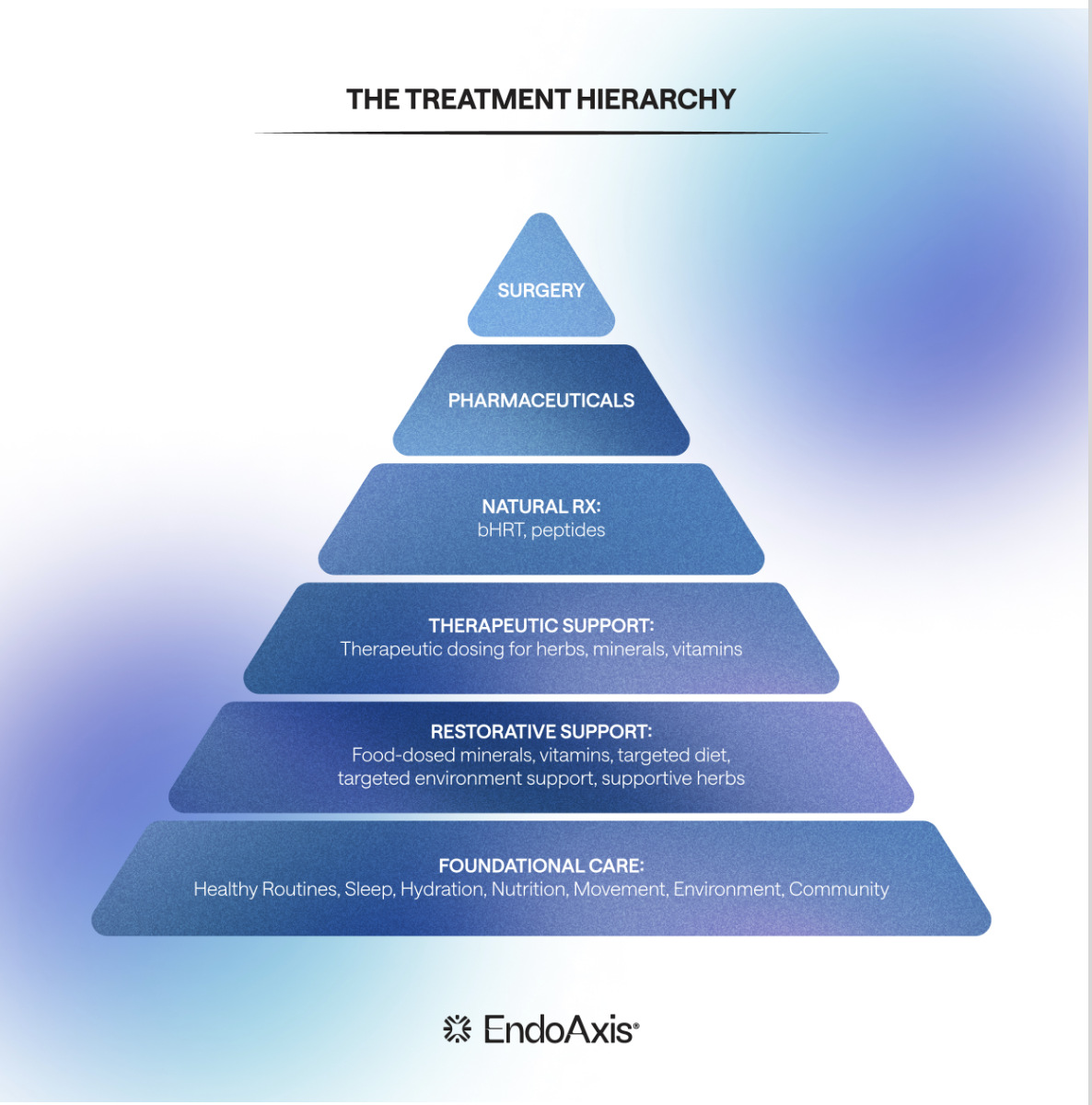
At its core, our model reminds us that true healing begins with foundational care. Before we reach for advanced interventions like surgery or pharmaceuticals, we must ask: Have we truly supported the basics?
Each report will discuss the interplay between the hormones, their metabolites, and the underlying metabolic concerns that could present with a given pattern. The reports then highlight lifestyle considerations, further lab analysis if warranted, as well as the addition of targeted herbal and nutraceutical formulations selected for a pattern (or patterns) of concern.
But optimal health and healing can only occur if our foundation is strong. For this reason, we want our providers to always consider the Treatment Hierarchy.
Level 1: Foundational Care
The base of the pyramid is where we focus on optimizing daily living—sleep, stress management, hydration, movement, nutrition, community, and environment. These factors are not simply lifestyle preferences; they are clinical levers. Unstable routines, chronic stress, poor sleep, and toxic environments all contribute to physiologic stress that compromises every system in the body. A patient in sympathetic overdrive will not respond predictably to supplements or medications. Supporting these areas is the first true act of care—and often where the biggest healing shifts begin.
Level 2: Restorative Support
Once lifestyle factors are addressed, the next tier of care involves correcting nutrient and physiological deficiencies. These are often the “quiet saboteurs” of wellness—subclinical hypothyroidism, iron deficiency, low vitamin D, or inadequate omega-3 levels are examples of potential underlying deficiencies that can alter physiological activity. Testing and restoring core nutrients like magnesium, folate, B12, CoQ10, and iron can rapidly change symptom expression and improve metabolic resilience.
This tier also involves supporting nutrient intake through targeted diet strategies and food-dosed supplementation. By restoring what’s lacking, we begin to give the body the raw materials it needs to heal.
Level 3: Therapeutic Support
This is where clinical-grade intervention begins—using targeted herbs and nutrients at therapeutic dosages. These aren’t multivitamins for general wellness. These are blends designed to elicit specific physiological responses, such as modulating estrogen metabolism, supporting adrenal resilience, or calming neuroinflammation.
Yet, this level cannot stand alone. If foundational care or basic nutrients are not in place, these interventions may be limited in effectiveness. For example, someone with heavy menstrual periods with concomitant iron deficiency who takes an estrogen-detox formula may continue to experience heavy menstrual cycles, as the endometrial lining depends on adequate iron stores to remain stable. Therapeutic interventions work best when the base is solid.
Level 4: Natural Rx
Here we enter the realm of bioidentical medications, such as peptides and bHRT (bioidentical hormone replacement therapy). These can be powerful tools—especially for hormone replenishment, metabolic restoration, or cellular regeneration. But again, they require a supportive foundation to truly work. For example, giving testosterone to a woman with poor adrenal function and sleep dysregulation will yield unpredictable results and possibly exacerbate imbalance.
Level 5-6: Pharmaceuticals and Surgery
The top tiers represent conventional medications and surgical intervention—both critical tools when needed. However, reliance on these tiers often grows when foundational care is neglected. When the base is weak, patients become increasingly dependent on higher-level, often more invasive, interventions. The goal is not to avoid these tiers, but rather to reduce dependency on them through proper groundwork.
Obstacles to Cure: The Hidden Barriers
Even with the perfect treatment plan, healing stalls if obstacles to cure remain in place. These may include:
- Environmental toxins (e.g. exposure to mold, xenoestrogens or oxidative stressors)
- Substances that suppress physiology (e.g., birth control preventing hormone balance, glucocorticoids suppressing the HPA-axis, caffeine, alcohol, etc.)
- Physiologic dysfunction (e.g., gut dysbiosis fueling systemic inflammation, insulin resistance, nutrient deficiencies, autoimmunity, etc.)
- Repressed emotions and traumas
Identifying and addressing any obstacles can be the key to unlocking therapeutic success.
Final Thought: Meet the Patient Where They Are
The most successful interventions start small. You don’t need to launch an aggressive protocol on day one. Begin where the patient is. Help them sleep better, eat more mindfully, or spend more time outdoors. Then slowly layer in nutrients, targeted herbs, and eventually physiologic support as needed.
EndoAxis helps to increase the rate of healing, when all foundational health is in place.
When you respect the hierarchy, you build resilient, adaptable health—and reduce the need for chronic medications and surgical interventions.
Remember:
- True healing is not rushed. It is structured.
- Start at the base. Build upward. Remove obstacles.
- And always ask: What does this patient need to thrive—not just survive?