Dr. Liz Bartman
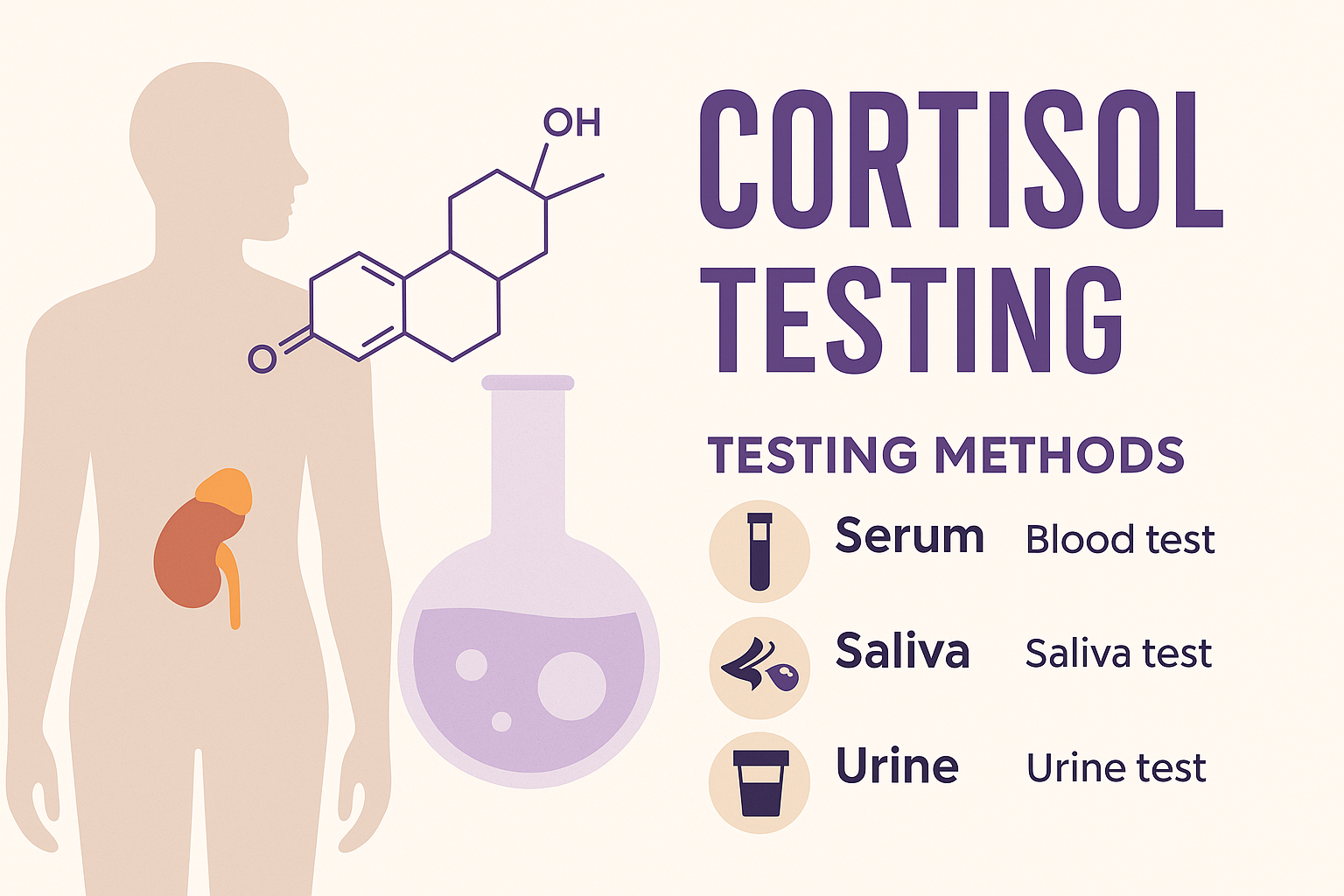
Did you know? If you only measure free cortisol, you could be missing a BIG part of their adrenal story! Cortisol testing is gaining attention as both providers and patients seek insights into stress responses. The type of test chosen influences how we interpret results and guide treatment.
Cortisol Testing Methods
Serum: Measures protein-bound cortisol at a single point in time; can be skewed by stress from blood draws.
Saliva: Captures free cortisol (active form) but not metabolites.
Urine: Assesses both free cortisol and metabolites, offering insight into production and clearance patterns.
A combination of salivary free cortisol and Urinary cortisol metabolites: This combination can offer the most information regarding in-the-moment signaling response, and the rate of cortisol clearance.
Key Cortisol Markers
Free cortisol: Active and available for tissue use.
Free cortisone: Inactive form of free cortisol – simply the loss of ONE hydrogen ion that “deactivates” cortisol, to help protect tissues like salivary glands and kidneys while the free hormone is in circulation.
Metabolized cortisol: Reflects overall cortisol production and clearance, with global tissue preference to either cortisone or cortisol.
A balance between free and metabolized cortisol indicates healthy HPA function. Imbalances can signal underlying issues such as inflammation, obesity, thyroid dysfunction, or impaired liver clearance.
Common Cortisol Patterns
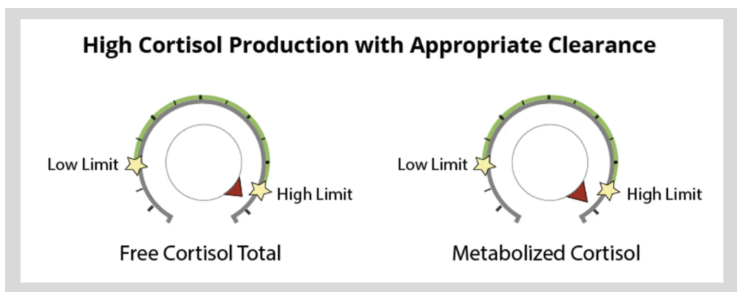
High Production & Appropriate Clearance: Increased demand met with effective (high) metabolism
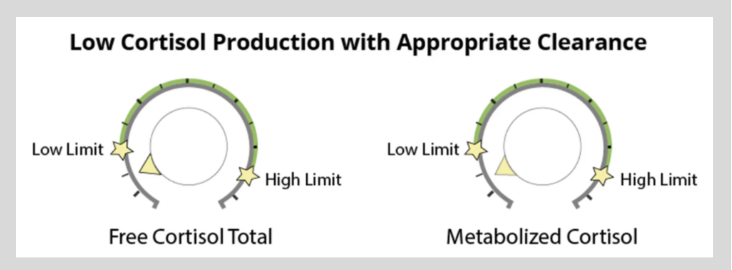
Low Production & Appropriate Clearance: Depleted cortisol levels with matched (low) clearance (truly low production!).
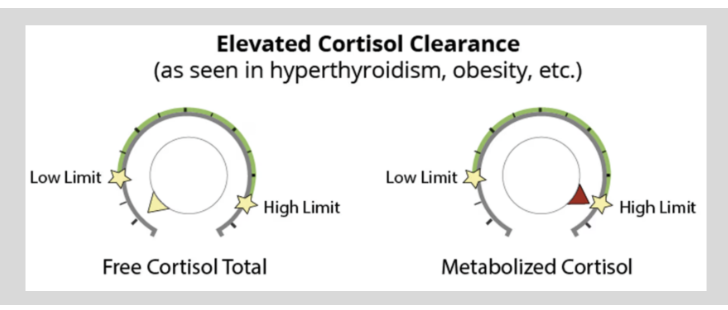
Low Free Cortisol & High Metabolized Cortisol: Increased production with rapid clearance, often due to inflammation, obesity, or high thyroid activity. If all you measured was free cortisol, and that is what you treated (by boosting cortisol because they look low) you could make that person feel worse, as their metabolites reveal they make A LOT of cortisol, they just metabolize it at a higher rate.
High Free Cortisol & Low Metabolized Cortisol: Sluggish clearance due to hypothyroidism or poor liver function, leading to “wired but tired” symptoms.
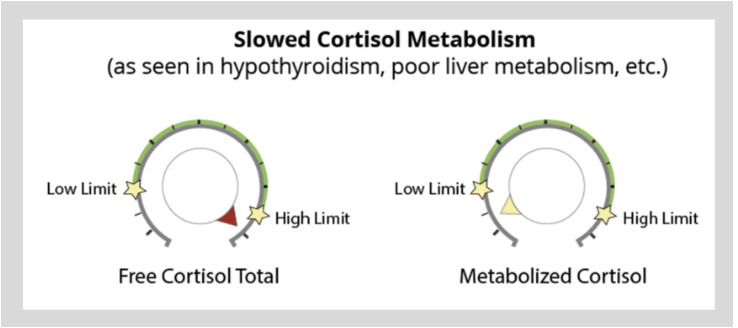
Understanding both free and metabolized cortisol is crucial to avoid misinterpretation and mistreatment. Supporting cortisol balance through targeted interventions can optimize stress response and metabolic health.
This is just the tip of the iceberg in understanding some of the nuances in cortisol production and metabolism. This is a 2-part series of diving in to cortisol metabolism.